The migration is a circle, not a season
The herds never stop moving. They chase fresh grass, which follows the rain. Because the timing shifts a little each year with the rains, no operator can promise an exact date for any event. What we can do, after decades of watching the same cycle, is tell you where the herds are most likely to be in a given month, and position your camps accordingly.
December to March: the southern plains and calving
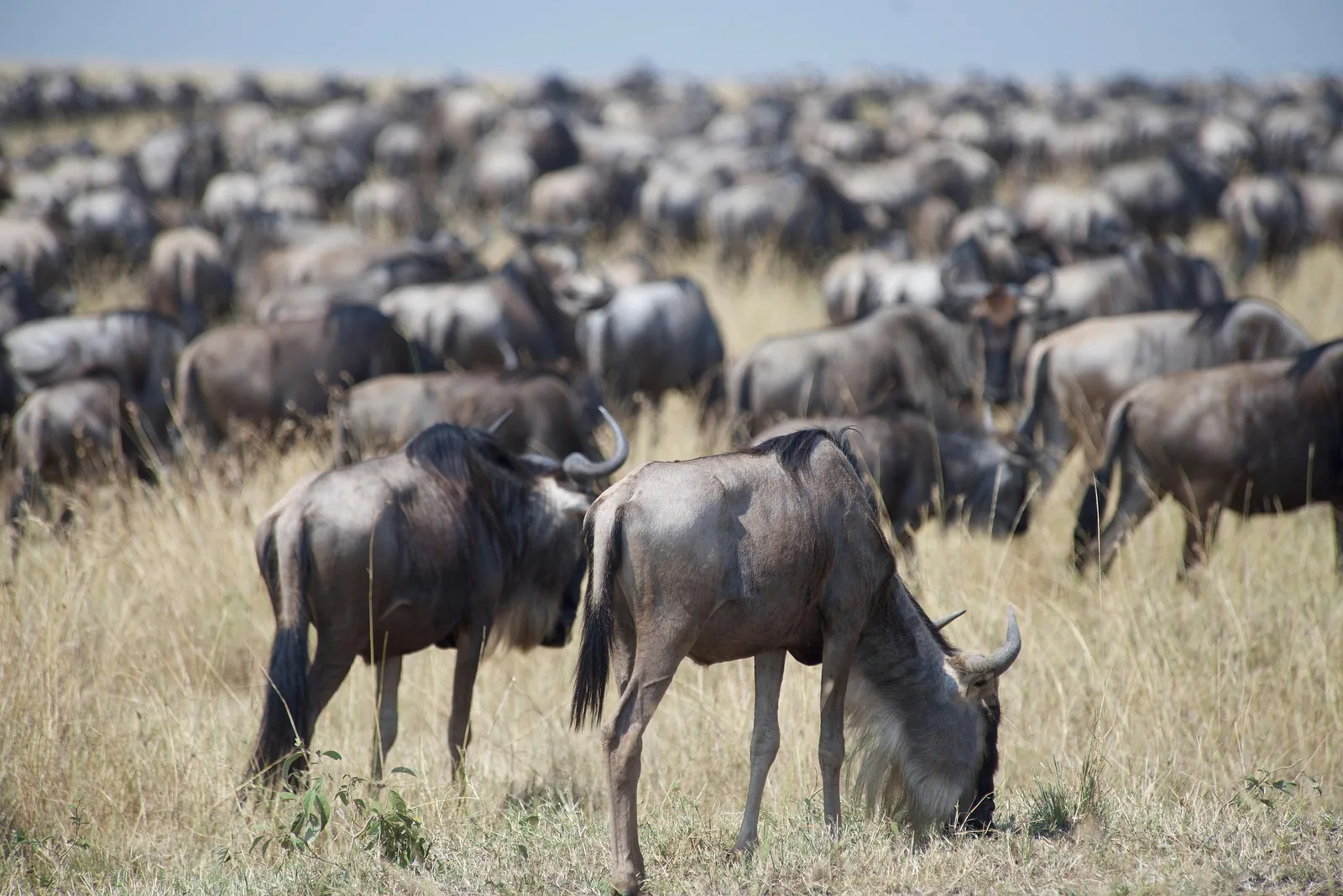
By December the herds have moved south to the short-grass plains around Ndutu and the southern Serengeti. This is calving season. In February, roughly half a million calves are born within a few weeks. It is one of the most concentrated wildlife spectacles on earth, and it draws predators in numbers. If you want dramatic lion and cheetah action, this is the season. The southern plains in February are my personal favourite time in the whole cycle.
April to May: the green season and the rut
The long rains arrive. The herds begin drifting north and west through the central Serengeti. This is low season, meaning fewer vehicles, lower prices, and lush green landscapes. Some roads get muddy and afternoon showers are common, but the light is beautiful and the value is excellent. The wildebeest rut, when males compete for mates, happens around this time and fills the plains with noise and movement.
June to July: the western corridor and the Grumeti
As the plains dry, the herds push into the Western Corridor toward the Grumeti River. The Grumeti crossings are less famous than the Mara but no less thrilling, with large crocodiles waiting in the pools. June is a fine month to catch the herds massing before the northern push, with far fewer crowds than the peak Mara season.
August to October: the Mara River crossings
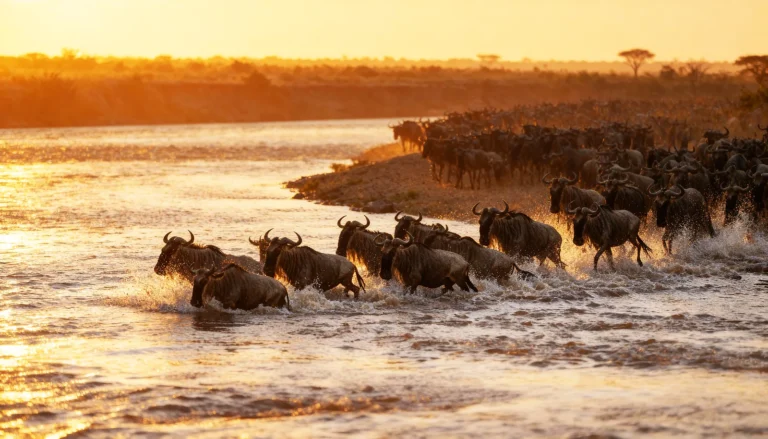
This is the season most travellers picture: thousands of wildebeest hurling themselves across the Mara River in the northern Serengeti, around Kogatende, while crocodiles wait. Crossings are unpredictable. A herd may build at the bank for hours then turn away, or cross in a sudden thundering rush. Patience is everything. To have the best chance, you need to be staying in the far north for several nights, not passing through for one. If a river crossing is your dream, plan three or more nights around Kogatende in these months.
November: the short rains and the return south
The short rains green the southern plains again, and the herds begin their journey back south. November is a quiet, rewarding month with good game and thinner crowds before the December influx.
How to plan around it
Two principles serve every migration trip. First, match your camp location to the season, a southern camp in February, a northern camp in August. Mobile tented camps that move with the herds are worth the premium. Second, give yourself time. The migration rewards patience. Three or four nights in the right area beats a rushed one-night stop every time. Talk to us about your dates and we will place you where the herds are most likely to be.